Gas vs Electric Geyser — which is best?
- Small families (1–3 people), limited space, reliable electricity: Electric geyser is usually the better choice.
- Large families (4–6+), frequent power cuts, need faster/heavier hot-water supply: Gas geyser often makes more sense. Which Geyser is best Gas or Electric.
- If you have ventilation constraints or a very small bathroom, prefer electric.
1.Head-to-head comparison
Heating speed
- Gas: Heats water faster — typically instant or within ~2–3 minutes for a running tap. Good for continuous hot water.
- Electric: Slightly slower — usually ~4–6 minutes to reach hot temperature depending on capacity and element power.
Capacity & continuous supply
- Gas: Better for continuous flow; good for big families and lengthier showers since flow isn’t limited by a stored tank.
- Electric: Many models are storage (tank-type) so capacity depends on tank size. For many people back-to-back, you may run out until it re-heats.
Running cost
- Gas: Can be cheaper per litre (depends on LPG price vs electricity tariff). For large households, gas can be economically better.
- Electric: Cheaper upfront and simpler; running cost depends on electricity rates and element wattage. For small families, it’s often cost-effective.
Installation & space
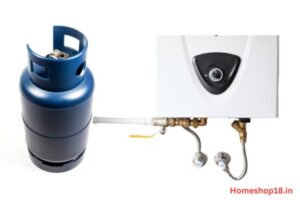
- Gas: Needs LPG cylinder or piped gas, proper ventilation, and professional installation. Requires more space for geyser + gas cylinder (or gas line).
- Electric: Easier and cheaper to install, smaller footprint. No ventilation required.
Safety
- Gas: Higher safety requirements — carbon monoxide risk if not ventilated properly; professional install and periodic checks are essential.
- Electric: Safer in normal conditions (no combustion). Must ensure earthing, proper insulation, and protection against water ingress.
Maintenance
- Gas: Typically higher maintenance — more components (burner, pilot, gas line) require servicing and periodic checks.
- Electric: Lower maintenance (heating element, thermostat); occasional descaling if water is hard.
Durability & parts
- Gas: Burners and valves may need servicing; depends on build quality.
- Electric: Heating elements (copper or glass-lined) may corrode/scale over time — glass-lined elements resist scaling better but cost more.
Suitability in small bathrooms
- Gas: Not ideal for small, poorly ventilated bathrooms (safety risk).
- Electric: Ideal for compact bathrooms with limited ventilation.
2.Practical recommendations & buying tips
- If your area has frequent power cuts or you need continuous hot water for a large household → choose gas (only if you can ensure ventilation and professional installation).
- If you want low installation hassle, less space usage, and simpler maintenance → choose electric.
- For safety: always buy certified models (ISI/BIS or relevant marks), and get professional installers for both types.
- For electric tank geysers: prefer glass-lined or stainless steel tanks for longer life if your water is hard.
- For gas geysers: ensure an auto shut-off feature and CO/pressure safety systems if available.
- If you have a small family and limited budget, buy a smaller electric storage geyser (15–25 L) or a point-of-use instant electric geyser.
- If you have 5+ members and high hot-water demand, consider a gas instant (tankless) geyser or multiple electric tanks.
Which Company Geyser is best
3.Quick comparison table
| Factor | Gas Geyser | Electric Geyser |
|---|---|---|
| Heating speed | Faster (instant flow) | Slower (depends on element/tank) |
| Best for | Large families, frequent power cuts | Small families, tight spaces |
| Installation | Needs ventilation, cylinder/piped gas, professional fit | Simple, compact, easier fit |
| Maintenance | Higher (burner, valves) | Lower (element, descaling) |
| Safety | Requires careful ventilation/safety checks | Safer (ensure earthing & IP rating) |
| Running cost | Often lower for heavy use (depends on local LPG vs power prices) | Cost depends on electricity tariff |
| Space needed | More (geyser + cylinder or gas line) | Less |
4.Short safety & installation checklist
- Use a certified installer for both gas and electric.
- Gas: Ensure proper ventilation, check for leaks, keep cylinder away from enclosed spaces, install carbon-monoxide detector if indoors.
- Electric: Ensure proper earthing, residual current device (RCD)/MCB protection, correct IP rating for bathroom, and periodic inspection of wiring.
- Flush/descale the heater periodically if water is hard.
Which is the best Bajaj Gas Geyser Review
FAQs
Q: Which is cheaper to run?
A: It depends on local LPG vs electricity rates and your usage. For heavy/continuous use (large family), gas often becomes cheaper.
Q: Can a gas geyser be used in a small bathroom?
A: Not recommended unless the bathroom has excellent ventilation and the installer confirms safety. Electric is safer in small/closed bathrooms.
Q: What if I have frequent power cuts?
A: Gas geyser lets you keep hot water during power outages (unless you need an electric pump). That’s a major advantage.
Q: Is maintenance expensive for gas?
A: Generally higher than electric—periodic servicing of burners and valves is needed.